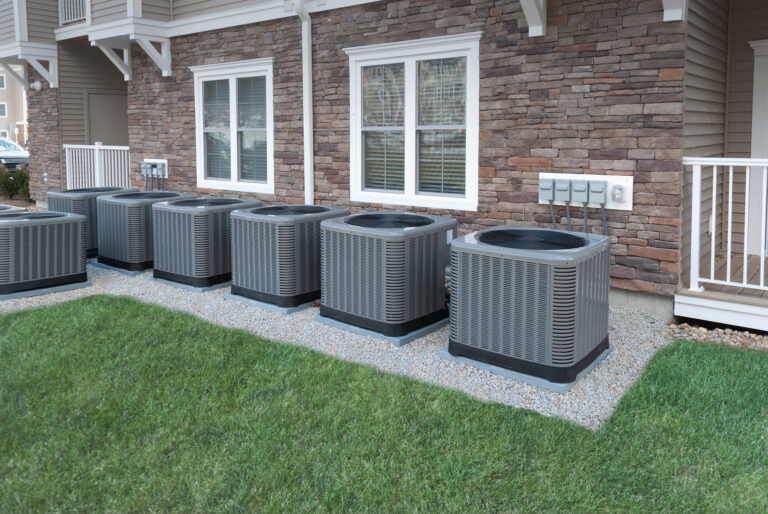

VRF Systems: Advanced Climate Control for Orlando and Central Florida
Variable Refrigerant Flow systems represent one of the most significant advancements in HVAC technology over the past two decades. At All Pro Cooling and Heating, we specialize in the design, installation, and service of VRF systems for commercial and residential properties throughout Orlando, FL and surrounding areas including Winter Park, Alafaya, Maitland, Altamonte Springs, Casselberry, and Oviedo. As a company founded in 2019 by Marcos Ramos with a strong focus on residential new construction, and later expanded into the commercial HVAC sector through a strategic partnership with Ken Demeiz in 2021, we have built the technical expertise necessary to deliver cutting-edge VRF solutions that outperform traditional HVAC systems in efficiency, comfort, and long-term value.
The global VRF market has experienced remarkable growth, with projections indicating the industry will exceed $30 billion by 2030. Much of this growth is driven by increasing demand for energy-efficient building solutions and the rising complexity of modern commercial and mixed-use structures. In Central Florida, where cooling demands remain high for the majority of the year, VRF technology offers a compelling alternative to conventional systems that often struggle to balance efficiency with performance across multiple zones.
What Is a VRF System and How Does It Work
A Variable Refrigerant Flow system is a sophisticated HVAC technology that uses refrigerant as the primary cooling and heating medium, distributing it through a network of piping to multiple indoor units connected to one or more outdoor condensing units. The term “variable refrigerant flow” refers to the system’s ability to precisely control the amount of refrigerant flowing to each indoor unit based on the real-time demand of each individual zone. This means different rooms or areas within a building can simultaneously receive different levels of heating or cooling without the energy waste associated with traditional ducted systems.
VRF systems operate using inverter-driven compressors that modulate speed continuously rather than cycling on and off like conventional compressors. This variable-speed operation allows the system to match its output to the exact thermal load required at any given moment. The result is dramatically reduced energy consumption, often achieving efficiency ratings that surpass traditional systems by 30 to 40 percent. There are two primary types of VRF systems: heat pump systems, which provide either heating or cooling to all zones simultaneously, and heat recovery systems, which can provide heating and cooling to different zones at the same time by redistributing recovered heat energy throughout the building.
Real-World Applications in Commercial and Residential Settings
VRF systems excel in commercial environments where zoning flexibility is essential. Hotels and hospitality properties benefit enormously because each guest room can maintain an independent temperature setting without affecting adjacent spaces. Office buildings with varying occupancy levels throughout the day can dynamically adjust climate control on a floor-by-floor or room-by-room basis, eliminating the common problem of overcooling empty conference rooms or underserving occupied workspaces. Retail establishments, medical offices, and restaurants also gain significant advantages from the precise temperature control VRF technology provides.
On the residential side, VRF systems are increasingly popular in custom homes, multi-story residences, and properties where traditional ductwork is impractical or undesirable. Our team of licensed and highly trained HVAC professionals has extensive experience with residential new construction projects where VRF systems can be integrated from the ground up, maximizing efficiency and aesthetic appeal. Because indoor units come in a variety of styles including wall-mounted, ceiling cassette, concealed ducted, and floor-standing configurations, homeowners enjoy tremendous design flexibility without compromising performance.
Key Advantages of VRF Technology in Central Florida
Central Florida’s subtropical climate creates unique demands on HVAC systems. Buildings face sustained cooling loads for eight to ten months of the year, with occasional heating needs during brief winter periods. VRF systems are exceptionally well-suited for this environment for several important reasons.
- Superior energy efficiency allows VRF systems to reduce electricity consumption significantly compared to traditional split or packaged systems, lowering utility costs even during peak summer months in Orlando
- Simultaneous heating and cooling capability in heat recovery configurations means that sun-exposed areas of a building can receive cooling while shaded interior zones receive heating, all from the same system
- Quiet operation results from inverter-driven compressors and compact indoor units that produce noise levels as low as 19 decibels, comparable to a whisper
- Compact outdoor footprint reduces the amount of rooftop or ground-level space required for equipment, which is especially valuable for commercial properties with limited mechanical areas
- Scalable design allows for future expansion by adding indoor units to existing outdoor condensing units without replacing the entire system
Our VRF Installation Process
Installing a VRF system requires a higher level of technical precision than conventional HVAC installations, and this is where our commitment to doing things right the first time truly sets us apart. Every VRF project begins with a comprehensive load calculation and building analysis. We evaluate the structure’s thermal envelope, occupancy patterns, window exposure, insulation values, and intended use for each zone. This data drives the system design, ensuring that every indoor unit is properly sized and positioned for optimal performance.
Once the design phase is complete, our installation team handles refrigerant piping layout, electrical connections, condensate drainage, and control wiring with meticulous attention to detail. Refrigerant piping in VRF systems must be brazed to exacting standards and thoroughly pressure-tested to prevent leaks that could compromise system efficiency and longevity. We perform vacuum and nitrogen testing procedures on every installation before charging the system with refrigerant. After commissioning, we configure the centralized control system, program zone parameters, and verify that every indoor unit is communicating properly with the outdoor unit.
VRF System Maintenance and Repair
Like all HVAC equipment, VRF systems require regular maintenance to sustain their high-performance capabilities. Our air conditioning service and HVAC repair expertise extends fully into VRF technology. Routine maintenance tasks include cleaning or replacing filters in each indoor unit, inspecting refrigerant charge levels, verifying electrical connections, cleaning condenser coils on outdoor units, and testing system controls and sensors. We recommend scheduling preventive maintenance at least twice per year to keep your VRF system operating at peak efficiency.
When issues do arise, diagnosing VRF problems demands specialized knowledge and equipment. These systems use advanced electronic control boards, thermistors, and communication protocols that differ significantly from traditional HVAC systems. Our technicians are trained to interpret VRF diagnostic codes, trace communication faults between indoor and outdoor units, and identify refrigerant circuit issues with precision. We also offer 24/7 emergency service because climate control failures in commercial settings can disrupt operations and create unsafe conditions for occupants and sensitive equipment.
The Future of VRF Systems and Industry Trends
VRF technology continues to evolve rapidly, with manufacturers introducing systems that feature improved refrigerants with lower global warming potential, enhanced integration with building automation systems, and compatibility with renewable energy sources like solar power. The push toward net-zero buildings and stricter energy codes is accelerating VRF adoption across the United States, particularly in climate zones like Central Florida where cooling-dominant loads make efficiency a top priority.
- Integration with smart building platforms allows facility managers to monitor and control VRF systems remotely through cloud-based dashboards, optimizing energy use in real time
- Advancements in low-GWP refrigerants are making VRF systems more environmentally responsible while maintaining or improving thermal performance
- Growing adoption in the residential market is driven by homeowners seeking ductless solutions that combine luxury-level comfort with meaningful energy savings
At All Pro Cooling and Heating, we stay at the forefront of these developments to ensure that every system we install reflects the latest in HVAC innovation. Whether you are planning a large-scale commercial build, retrofitting an existing structure, or designing a custom home in the Orlando area, our team is ready to deliver a VRF solution engineered for your specific needs. We do not just meet standards — we set them, and VRF technology is one of the most powerful tools we use to achieve that goal for our clients across Central Florida.