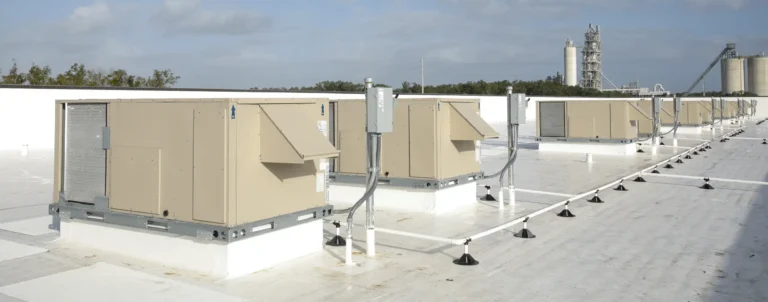

Ventilation Systems for Orlando Homes and Businesses
Indoor air quality is one of the most overlooked aspects of building comfort and occupant health. According to the Environmental Protection Agency, Americans spend approximately 90 percent of their time indoors, where pollutant concentrations can be two to five times higher than outdoor levels. A properly designed and maintained ventilation system is the foundation for addressing this challenge. At All Pro Cooling and Heating, we provide expert HVAC services for Orlando, FL and surrounding areas, including Winter Park, Alafaya, Maitland, Altamonte Springs, Casselberry, and Oviedo. Our team of licensed and highly trained professionals delivers comprehensive ventilation solutions for both residential and commercial properties throughout Central Florida.
Founded in 2019 by Marcos Ramos with a strong focus on the residential new construction market, our company expanded significantly in 2021 when Ken Demeiz joined as a strategic partner, bringing deep expertise in the commercial HVAC sector. This dual perspective gives us the ability to approach ventilation design and installation with a thorough understanding of both residential comfort standards and commercial code requirements. Whether you are building a new custom home or managing a large-scale commercial project, we bring the same meticulous attention to detail and commitment to doing things right the first time.
How Ventilation Systems Work
Ventilation is the controlled process of exchanging indoor air with outdoor air to remove moisture, odors, carbon dioxide, and airborne contaminants. Every HVAC system relies on some form of ventilation, but the effectiveness of that ventilation depends on proper design, equipment selection, and installation. In Central Florida, where heat and humidity dominate the climate for much of the year, ventilation systems must balance fresh air introduction with moisture control to prevent mold growth and maintain energy efficiency.
There are three primary categories of ventilation: natural, mechanical, and hybrid. Natural ventilation relies on windows, doors, and passive airflow pathways. While simple, it is rarely sufficient in the Orlando climate due to high humidity levels and the need for consistent air conditioning. Mechanical ventilation uses fans, ductwork, and air handling equipment to move air through a building in a controlled manner. Hybrid systems combine elements of both approaches, using mechanical assistance when natural airflow is insufficient. We specialize in mechanical and hybrid ventilation solutions that are engineered specifically for the demands of Florida’s subtropical environment.
Types of Mechanical Ventilation Systems
Choosing the right ventilation system depends on the building type, occupancy patterns, local climate conditions, and energy goals. Our team evaluates each project individually and recommends systems that optimize air quality without compromising energy efficiency. The following are the primary mechanical ventilation systems we design and install:
- Exhaust ventilation systems work by depressurizing the building, pulling stale indoor air out through exhaust fans typically located in bathrooms and kitchens, while fresh air enters through passive vents or building envelope leaks
- Supply ventilation systems pressurize the building by using a fan to push outdoor air inside, allowing stale air to escape through exhaust vents and building gaps, which provides better control over incoming air quality
- Balanced ventilation systems introduce and exhaust roughly equal quantities of air, maintaining neutral pressure within the building and offering the most precise control over indoor air quality
- Energy recovery ventilators (ERVs) transfer both heat and moisture between incoming and outgoing airstreams, making them particularly well suited for humid climates like Orlando where managing latent heat loads is critical
- Heat recovery ventilators (HRVs) transfer heat between airstreams without exchanging moisture, providing energy-efficient ventilation in applications where humidity transfer is not desired
In our experience working across residential new construction and commercial builds in Central Florida, energy recovery ventilators consistently deliver the best performance for this region. ERVs can recover up to 70 to 80 percent of the energy from exhausted air, dramatically reducing the load on air conditioning systems during summer months. This translates directly into lower utility bills and extended equipment life for our clients.
Residential Ventilation Solutions
Modern homes are built significantly tighter than those constructed even twenty years ago. While improved building envelopes reduce energy waste, they also trap pollutants, cooking fumes, volatile organic compounds from building materials, and excess humidity inside the home. Without a dedicated ventilation strategy, these contaminants accumulate and create an unhealthy living environment. Florida building codes now require mechanical ventilation in new residential construction, recognizing that natural infiltration alone is no longer adequate.
We design residential ventilation systems that integrate seamlessly with your air conditioning and heating equipment. During new construction projects, we coordinate ventilation ductwork layout with the overall HVAC design to minimize material waste and optimize airflow. For existing homes, we assess the current system and identify the most effective way to introduce mechanical ventilation without major structural modifications. Common residential applications include whole-house ERV installations, bathroom and kitchen exhaust upgrades, and duct system modifications to improve air distribution throughout the home.
Commercial Ventilation Applications
Commercial buildings present unique ventilation challenges due to higher occupancy densities, diverse space functions, and stricter code requirements. ASHRAE Standard 62.1 establishes minimum ventilation rates for commercial buildings based on occupancy type, and compliance requires careful engineering calculations during the design phase. Restaurants, medical offices, retail spaces, and warehouses each have distinct ventilation demands that require tailored solutions.
Our commercial capabilities include rooftop unit ventilation integration, dedicated outdoor air systems, demand-controlled ventilation using CO2 sensors, and make-up air systems for commercial kitchens. Demand-controlled ventilation is particularly valuable for spaces with variable occupancy, such as conference rooms, restaurants, and event venues. By monitoring carbon dioxide levels in real time, these systems adjust fresh air delivery to match actual occupancy, reducing energy consumption by as much as 20 to 30 percent compared to fixed-rate ventilation.
Maintenance and Indoor Air Quality
Even the best-designed ventilation system will underperform without regular maintenance. Filters become clogged, dampers stick, fans lose efficiency, and ductwork accumulates debris over time. We recommend scheduled maintenance visits that include the following key service items:
- Filter inspection and replacement to maintain proper airflow and contaminant removal efficiency
- Ductwork inspection for leaks, moisture intrusion, and biological growth that can compromise air quality
- Fan motor and belt assessment to ensure mechanical components operate at design specifications
- Damper and control verification to confirm that outdoor air intake volumes meet ventilation requirements
- ERV or HRV core cleaning to maintain energy recovery efficiency and prevent cross-contamination between airstreams
We offer 24/7 emergency service because ventilation failures do not always happen during business hours. A failed exhaust system in a commercial kitchen or a malfunctioning ERV during peak summer humidity can create health hazards and code violations that require immediate attention. Our team responds quickly to diagnose and resolve ventilation emergencies across the Orlando metropolitan area.
The Future of Ventilation Technology
The ventilation industry is evolving rapidly, driven by growing awareness of indoor air quality and advances in smart building technology. Variable-speed electronically commutated motors are replacing traditional single-speed fans, offering quieter operation and significantly lower energy consumption. Smart controls now allow ventilation systems to respond to real-time data from indoor air quality sensors, adjusting airflow based on particulate levels, humidity, and volatile organic compound concentrations rather than simple timers or occupancy schedules.
At All Pro Cooling and Heating, we stay at the forefront of these developments to bring our clients the most effective and efficient ventilation solutions available. We are a dedicated team that takes pride in delivering top-tier service on every project, and we do not just meet standards — we set them. Contact us to discuss your ventilation needs for any residential or commercial project in Central Florida.